Bangladesh Protests Intensify in India After Lynching of Hindus, Political Turmoil Deepens Ahead of Polls
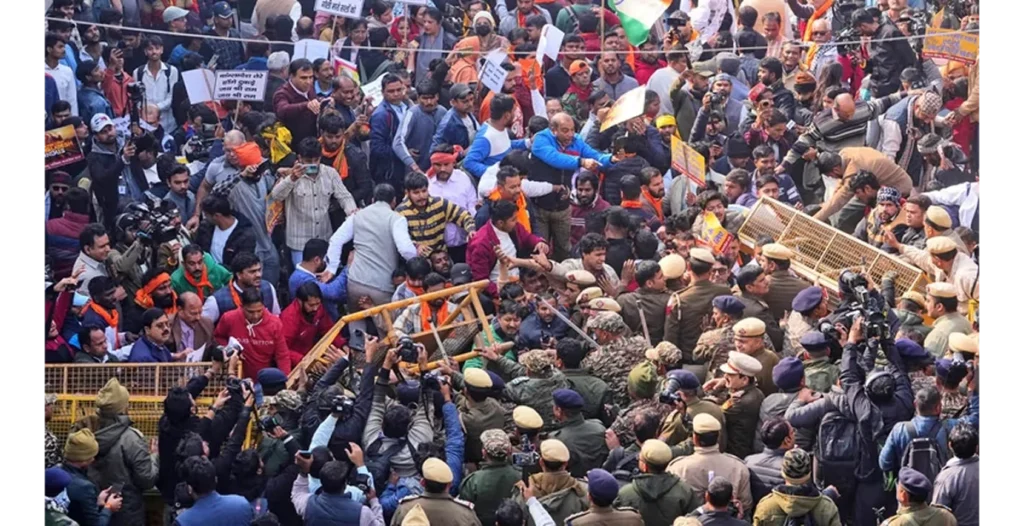
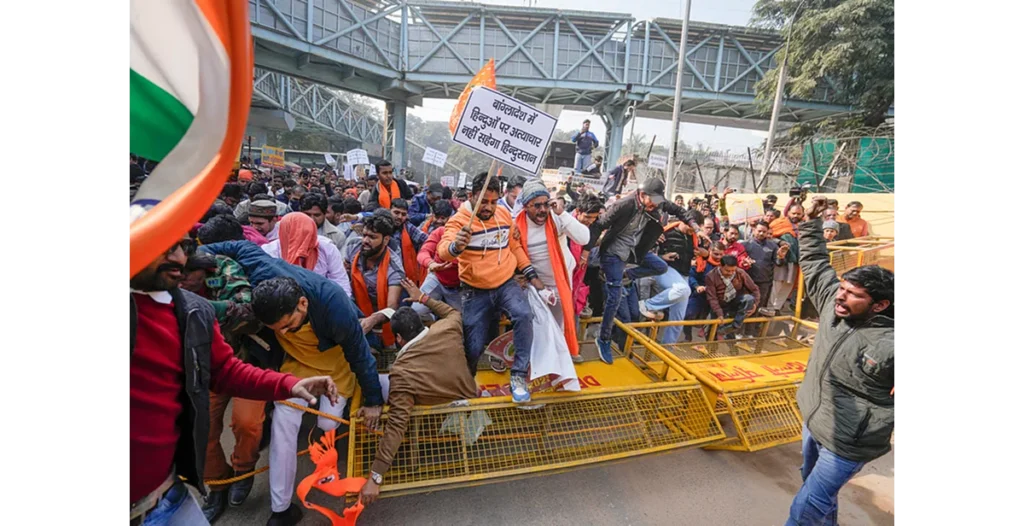
Protests linked to the ongoing unrest in Bangladesh intensified across parts of India on Thursday, as anger grew over the lynching of two Hindu men in the neighbouring country. Demonstrations were reported outside religious sites and diplomatic missions, reflecting wider concern over law and order in Bangladesh amid a volatile political transition. The Bangladesh protests have also drawn international attention, with the United Nations urging restraint ahead of the country’s general elections.
The killing of Dipu Chandra Das in Mymensingh and Amrit Mondal in Rajbari district earlier this week has emerged as a flashpoint, triggering reactions from religious organisations and political parties in India. Protesters have demanded strong diplomatic action to ensure the safety of minority communities in Bangladesh, where tensions have risen sharply in recent weeks.
Protests outside Puri Jagannath Temple and Indian cities
On Thursday morning, activists of the Bajrang Dal staged a protest outside the Puri Jagannath Temple in Odisha, condemning the lynchings and calling for accountability. Similar demonstrations were held outside Bangladeshi missions in several Indian cities, with participants raising slogans and submitting memoranda to local authorities.
Leaders of the Vishva Hindu Parishad (VHP) said the Bangladesh protests reflected deep concern over repeated reports of violence against minorities. VHP spokesperson Vinod Bansal urged international bodies to intervene, stating that the situation ahead of the Bangladesh elections was “a matter of global concern.” He questioned the lack of strong action by international human rights mechanisms and warned that continued violence could destabilise the region.
Political parties, including the BJP and the Congress, have also taken to the streets, demanding that the Centre raise the issue with Dhaka through diplomatic channels. While the protests in India have largely remained peaceful, security was tightened around sensitive locations as a precaution.
Political uncertainty grips Bangladesh
The Bangladesh protests come at a time of significant political flux in the country. The return of Bangladesh Nationalist Party (BNP) acting chairman Tarique Rahman to Dhaka after 17 years in self-imposed exile has reshaped the political landscape ahead of the February 12 parliamentary elections. Rahman, son of former Prime Minister Khaleda Zia, arrived on Thursday to a rousing reception by party supporters.
His return has boosted BNP morale, particularly after the blanket ban on former Prime Minister Sheikh Hasina’s Awami League, a move that has drawn criticism from rights groups and international observers. Former Indian envoy to Bangladesh Veena Sikri noted that Rahman’s arrival could significantly strengthen the BNP’s prospects, even as alliances among Islamist parties remain fluid.
Bangladesh is currently governed by an interim administration led by Nobel laureate Muhammad Yunus, which assumed office following mass student-led protests that forced Sheikh Hasina out of power. However, the same protest movement has since become difficult to contain, with reports of lynchings, targeted attacks, and vandalism of media and cultural institutions adding to instability.
International concern and UN response
The scale of the Bangladesh protests and reports of violence have prompted responses from the United Nations. UN Secretary-General António Guterres recently appealed to protesters to refrain from violence and exercise restraint to preserve a peaceful electoral environment. UN Human Rights Chief Volker Türk echoed the call, warning that retaliation and revenge would only deepen divisions.
The UN has also urged Bangladeshi authorities to ensure that all citizens, regardless of political or religious affiliation, can participate safely in public life. Observers say these statements underline growing international unease about the credibility and safety of the upcoming elections.
Regional implications and diplomatic focus
For India, the Bangladesh protests carry both humanitarian and strategic implications. New Delhi has traditionally maintained close ties with Dhaka and has emphasised stability and inclusive governance in its neighbourhood. Officials are closely monitoring developments, particularly any spillover effects that could impact bilateral relations or regional security.
Analysts note that while protests in India reflect domestic political pressures, they also highlight broader concerns about minority rights and democratic processes in South Asia. The situation remains fluid, with further demonstrations likely as Bangladesh moves closer to its election date.
As authorities in both countries assess the unfolding events, the focus remains on restoring calm, ensuring accountability for the killings, and safeguarding democratic norms. With the Bangladesh protests continuing to resonate beyond its borders, the coming weeks are expected to be critical for the country’s political future and regional stability.