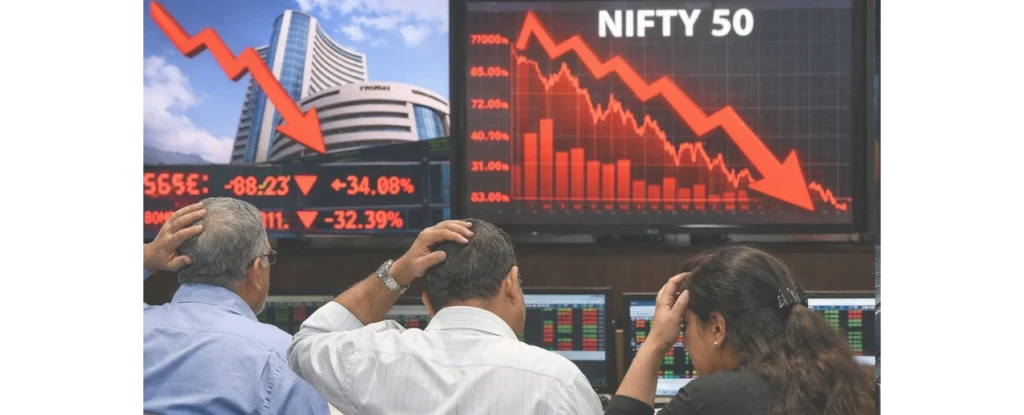
Stock Market Crash Today: Investors Lose Rs 15 Lakh Crore in an Hour as Geopolitical Tensions Rattle Markets
Stock Market Crash Today sent shockwaves across Dalal Street on Monday as benchmark indices plunged sharply, wiping out nearly Rs 15 lakh crore of investor wealth within hours of opening. The steep fall reflects rising global uncertainty, particularly due to escalating tensions in the Middle East and concerns over oil supply disruptions.
Both the Sensex and Nifty 50 ended deep in the red, mirroring panic across global markets. Within the first hour of trading, market capitalisation of companies listed on the Bombay Stock Exchange dropped significantly, highlighting the intensity of the sell-off.
At 10:23 am, the total market cap fell to Rs 416.98 trillion from Rs 428.76 trillion at the previous close. By the end of the session, it declined further to Rs 414 trillion, indicating sustained selling pressure throughout the day.
Geopolitical Tensions Trigger Stock Market Crash Today
The primary driver behind the Stock Market Crash Today is the escalating conflict involving Iran and growing uncertainty around the Strait of Hormuz. This key shipping route handles a significant portion of global oil supply, making it critical for energy markets.
Investors reacted sharply to fears that prolonged disruption could push crude oil prices higher, triggering inflationary pressures globally. Market participants are increasingly shifting towards safer assets amid the uncertainty, leading to widespread selling in equities.
Experts note that Indian markets are particularly sensitive due to the country’s heavy reliance on oil imports. Any supply shock directly impacts inflation, currency stability, and corporate earnings.
Crude Oil Surge and Weak Rupee Deepen Market Rout
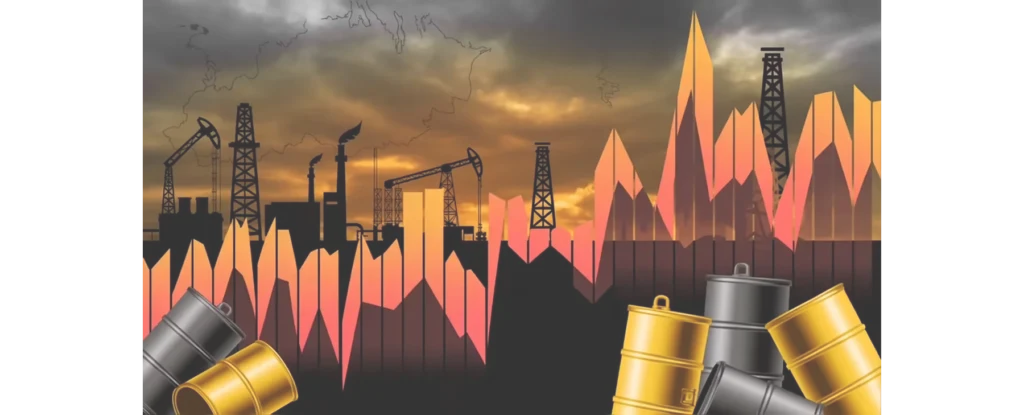
Rising crude oil prices have compounded the impact of the Stock Market Crash Today. Brent crude hovered above $112 per barrel, while WTI crude crossed $99, marking a sharp increase of over 50% this month.
The International Energy Agency has warned that current conditions could resemble past oil shocks, raising concerns about global economic stability.
Higher oil prices typically lead to increased input costs, reduced corporate margins, and rising inflation — all of which negatively affect market sentiment.
Adding to the pressure, the Indian rupee weakened to a record low of 94 against the US dollar. The currency has depreciated nearly 3% since the conflict escalated, making imports costlier and increasing the risk of capital outflows.
A weaker rupee further intensifies inflation concerns and may prompt tighter monetary conditions, creating additional headwinds for equities.
Broad-Based Selling Across Sectors
The Stock Market Crash Today was marked by widespread selling across sectors, indicating panic-driven exits rather than selective profit booking.
Banking stocks such as HDFC Bank, ICICI Bank, and Axis Bank saw notable declines. IT majors like Infosys and TCS also traded lower.
Other sectors including auto, consumption, infrastructure, and cement witnessed similar trends. Stocks like Maruti Suzuki, Asian Paints, and Larsen & Toubro declined amid broad-based risk aversion.
Foreign Portfolio Investors (FPIs) have accelerated their selling activity, offloading over Rs 1 lakh crore worth of equities since the conflict began. This sustained outflow has further weakened market sentiment.
Global Weakness Amplifies Stock Market Crash Today
The Stock Market Crash Today is not an isolated event. Global markets, particularly in Asia, have also witnessed sharp declines. Indices in countries like Japan and South Korea have dropped significantly as investors brace for prolonged geopolitical instability.
Concerns remain that continued tensions could delay interest rate cuts, push global inflation higher, and slow economic growth. These factors collectively contribute to risk-off sentiment across markets.
Analysts believe that near-term market direction will largely depend on developments in the Middle East, movement in crude oil prices, and currency stability.
Outlook Remains Uncertain
The Stock Market Crash Today underscores the fragile nature of global financial markets amid geopolitical stress. With uncertainty still high, volatility is expected to persist in the coming days.
Market experts advise caution, suggesting that investors avoid reacting to short-term fluctuations and instead focus on long-term fundamentals. Monitoring global cues, especially oil prices and geopolitical developments, will remain critical.
As the situation evolves, the trajectory of the Stock Market Crash Today will continue to hinge on external triggers rather than domestic fundamentals, keeping investors on edge in the near term.