Humanitarian crisis of Seafarers navigating dangerous waters.
The global economy depends on commercial shipping to transport essential goods, food, energy and raw materials across international borders. Yet, behind this vast network are thousands of seafarers who spend months away from their families, often working under difficult and dangerous conditions. As conflicts intensify across the Red Sea, the Strait of Hormuz and the Black Sea, these workers are increasingly exposed to the devastating consequences of modern warfare.
For seafarers, the sea is no longer just a place of work. It has become a landscape of uncertainty, fear and psychological distress.
When Global Conflicts Reach the Deck
Maritime chokepoints are vital to international trade, but their strategic importance has also made them vulnerable to geopolitical tensions. Drone and missile attacks in the Red Sea, security threats in the Strait of Hormuz, and naval confrontations and sea mines in the Black Sea have created serious risks for commercial vessels.
While governments focus on security and sovereignty, and shipping companies assess financial losses and supply chain disruptions, the people onboard face a more immediate concern: their safety.
A sudden explosion, an unexpected security alert or the possibility of an attack can transform an ordinary voyage into a terrifying experience. Unlike military personnel, civilian seafarers are not trained to operate in combat situations. They have limited means of protecting themselves and must often continue working despite the uncertainty surrounding them.
The consequences extend beyond the immediate danger. Prolonged exposure to threats, disrupted communication and separation from loved ones can leave lasting emotional scars.
The Human Cost of Life in Conflict Zones
The humanitarian crisis at sea is not limited to the threat of physical injury or death. Many crews face extended periods onboard because of delayed crew changes, restricted movement and unsafe travel conditions. These circumstances can force seafarers to work beyond their planned contracts, increasing fatigue and emotional exhaustion.
Communication difficulties caused by electronic interference can further deepen their isolation. For a sailor unable to contact family members during a security emergency, uncertainty can become almost unbearable.
There is also a difficult financial reality. Although shipping companies may face rising insurance premiums and operational costs in high-risk regions, seafarers do not necessarily receive greater compensation or adequate psychological support. Some workers may also feel pressured to continue sailing because refusing an assignment could threaten their employment and future opportunities.
These challenges raise important questions about the responsibility of employers, governments and the international maritime community to protect the people who keep global trade moving.
Prashantha Naveen Karkera: Remembering the People Behind the Headlines
For author Prashantha Naveen Karkera, the human consequences of maritime insecurity are not simply matters of international concern. They are stories that deserve to be remembered and understood.
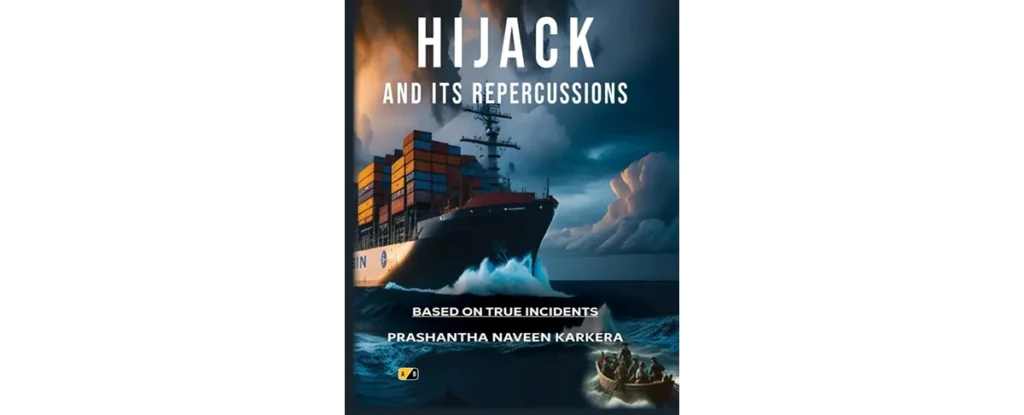
Her book, Hijack and Its Repercussions, documents a true hijacking incident from 1998, bringing attention to the experiences of the crew members who endured those frightening events. Rather than focusing only on the vessel, the incident or its wider implications, the book highlights the people whose lives were directly affected.
Revisiting such an experience can be emotionally challenging. Reconstructing terrifying days and nights requires confronting memories that may have remained painful long after the incident ended. Nevertheless, Karkera believes these experiences deserve to be brought into public discussion.
Her academic background, including a Master’s degree in International Politics from the University of Bombay, also offers a perspective on the relationship between international conflict and its human consequences.
At the heart of her work, however, is a simple but powerful message: behind every maritime incident are individuals, families and lives changed by circumstances beyond their control.
Why a Story from 1998 Matters Today
Although the incident documented in Hijack and Its Repercussions occurred decades ago, its relevance has not diminished. The nature of maritime threats has evolved, with modern crews facing drones, missiles, electronic interference and increasingly unpredictable security situations. Yet the fundamental human experience of fear, uncertainty and vulnerability remains much the same.
A sailor caught in a dangerous situation does not experience conflict as a distant political disagreement. The threat is immediate and personal. Every warning, communication failure or unexpected movement can raise concerns about survival and the possibility of returning home.
Stories such as Karkera’s help readers understand what statistics and breaking news often fail to convey: the psychological cost of living through danger. They also remind the maritime industry that physical safety and mental well-being must be treated as equally important priorities.

Protecting the People Who Keep the World Moving
The crises affecting major shipping routes have exposed a difficult truth: global trade relies on a workforce that can be remarkably vulnerable when geopolitical tensions escalate. Protecting seafarers requires more than security measures. It demands safe crew rotations, access to essential supplies, reliable communication, fair employment practices and meaningful psychological support.
For Prashantha Naveen Karkera, telling these stories is a way to keep the conversation alive and ensure that the experiences of seafarers are not forgotten.
Hijack and Its Repercussions is a reminder that history is not only about ships, political decisions and international events. It is also about the people who experience them firsthand, often without ever choosing to become part of history.
As the world continues to depend on maritime trade, the safety and dignity of those working at sea must remain a shared responsibility. Their stories deserve to be heard, their trauma deserves recognition, and their lives deserve protection.
A Fragmented Horizon The crises in the Strait of Hormuz, the Red Sea, and the Black Sea have laid bare an uncomfortable truth: the global supply chain is built on the backs of a vulnerable, exploited workforce. As long as maritime chokepoints are used as battlegrounds, the line between commercial shipping and military conflict will remain dangerously blurred, leaving the world’s sailors to pay the ultimate price for geopolitical discord.
About the Author: Prashantha Naveen Karkera is the author of Hijack and Its Repercussions, a book documenting a real hijacking incident from 1998 and its impact on those involved.
Read the book: Hijack and Its Repercussions on Amazon
YouTube: Watch the related video
Contact: 9869308969